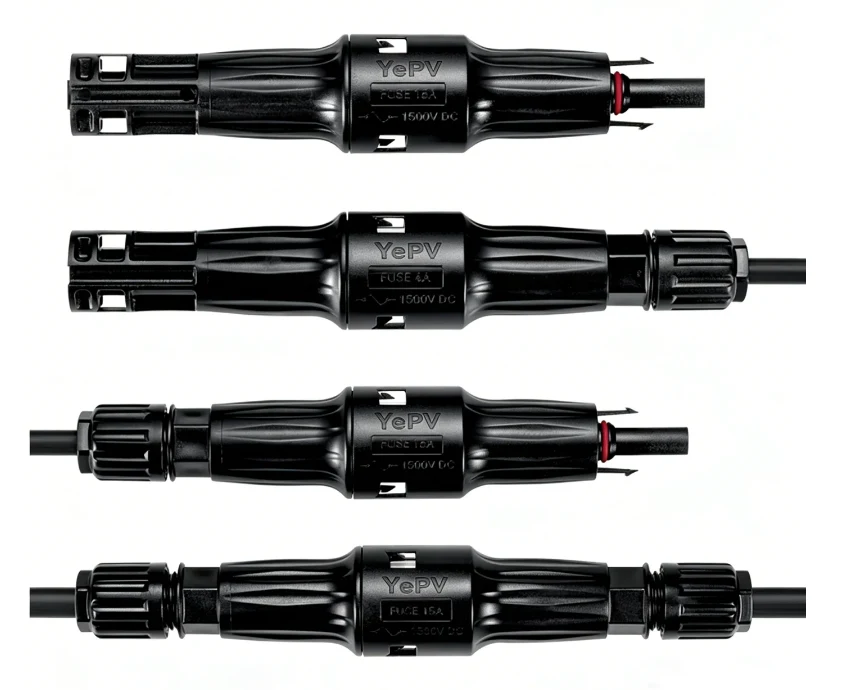
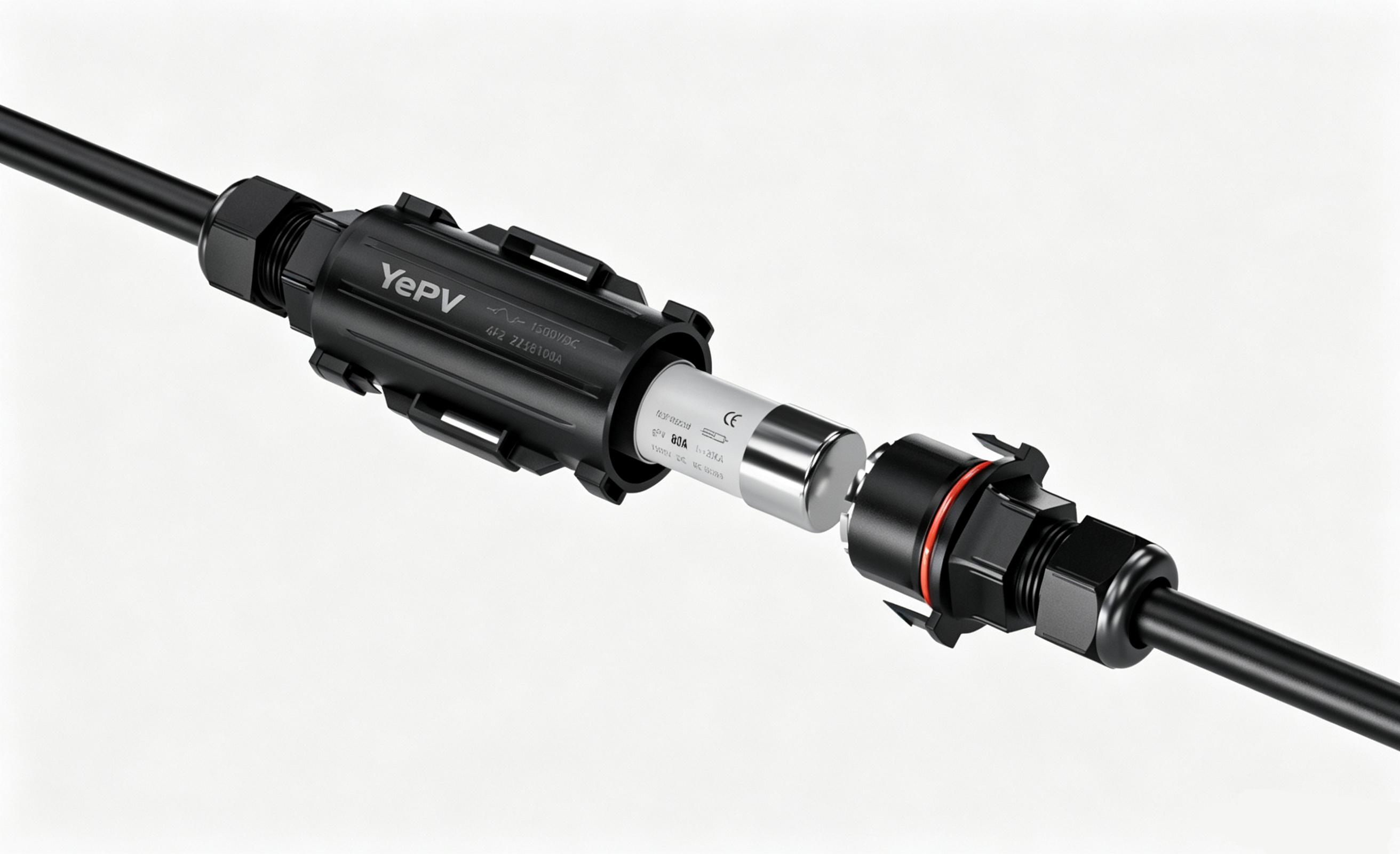
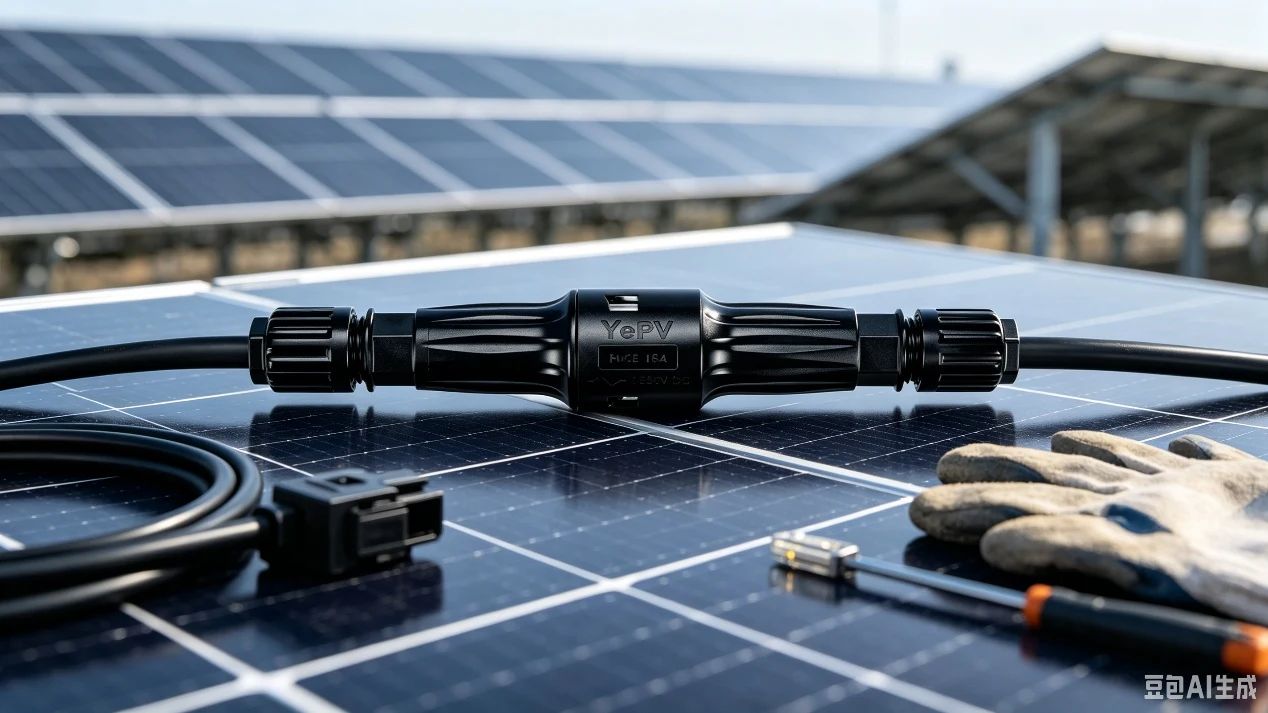
Choosing the correct fuse is a safety decision, not a detail. Wrong selection leads to DC arcing, fire and large-scale equipment loss. NFPA reported in 2023 that overcurrent protection failure is one of the three leading electrical causes of PV fires — yet many designers still treat fuse selection as secondary.
Case study 1 — USD 1.8 million plant fire, Arizona
On 15 June 2023 at a 50MW ground-mount plant near Phoenix, an ordinary DC cable insulation fault escalated into a catastrophic fire that destroyed 42 combiner boxes, 8 string inverters and 1.2MW of modules — close to USD 1.94 million in losses. Root cause analysis found three errors: general-purpose gG fuses fitted instead of gPV, insufficient DC arc interruption capability, and no temperature derating despite 65°C on site. The project engineer admitted: "We had always used these fuses on AC projects. The datasheet said DC rated — we did not know PV DC fuses were a different technology."
Case study 2 — Commercial rooftop fire, California
A 250kW rooftop system burned after a DC fuse in the combiner box failed. The fuse was rated 600VDC — standard for older systems — while modern high-efficiency modules ran consistently above 900VDC. The result was sustained arcing that melted the fuse base and ignited nearby insulation.
Case study 3 — Ground-mount plant, Southeast Asia
At a 10–20MWp plant, fire started from a single faulted string that the protection devices could not clear cleanly.
Installation practice that prevents burnout
Crimp with the dedicated MC4 tool, keep contact resistance <= 0.35mΩ and pull-test every terminal.
Apply the correct torque: typically 1.0–1.2Nm for MC4 connectors, up to 2.5Nm for larger terminals.
Derate for temperature: a fuse rated 15A at 25°C may only carry 11A at 85°C. Combiner boxes on dark roofs exceed 85°C in summer. At 3000m altitude multiply the rating by 0.85.
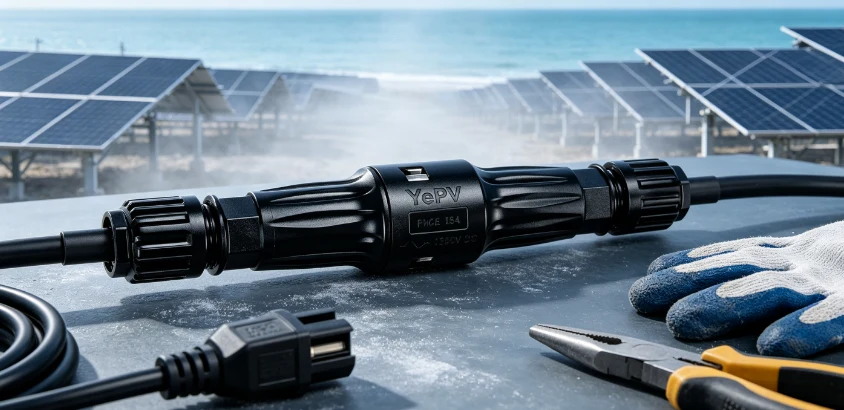
Prevent corrosion in coastal or humid sites with dielectric grease, tinned copper or stainless terminals, and IP68 inline fuse connectors with additional housings.
Lock and strain-relieve every connector so vibration or cable tension cannot open a spark gap.
Seal all unused DC ports with waterproof caps to maintain the IP rating.
Common errors and the fix
gG instead of gPV: a gG fuse cannot break a DC arc. Always specify gPV to IEC 60269-6 or UL 2579.
Ignoring cold-weather voltage rise: module voltage can climb 25–30% at -20°C. Apply a temperature correction factor of about 1.25 to Voc.
Oversizing to stop nuisance trips: the fuse then never clears and the string keeps burning. Use 1.56 x Isc and never exceed the module maximum series fuse rating.
Undersizing: repeated nuisance operation and downtime. Calculate properly and use the derating factors.
AC-rated fuses in DC circuits: a direct fire hazard.
Poor crimping: high contact resistance, heat, arcing, fire.
Ignoring breaking capacity: the fuse can rupture instead of interrupting. For 1500V systems target >= 50kA at the combiner.
Post-installation verification
Fuse is gPV certified (IEC 60269-6 or UL 2579 marking visible)
Voltage rating >= temperature-corrected string Voc (1000V or 1500V as applicable)
Current rating = 1.56 x Isc and <= module maximum series fuse rating
Breaking capacity >= maximum available fault current
Crimp secure and pull-tested; contact resistance measured (target <= 0.35mΩ)
Torque applied to manufacturer specification, strain relief installed
Connectors fully mated with audible click; unused ports capped
Derating applied for high temperature or high altitude
Independent fuse per string wherever three or more strings run in parallel
The Arizona fire was avoidable. So were California and Southeast Asia. All three shared the same root cause: wrong fuse selection and installation. Choosing a PV string fuse is not complicated, but it requires attention to detail, an understanding of DC physics and respect for the standards.