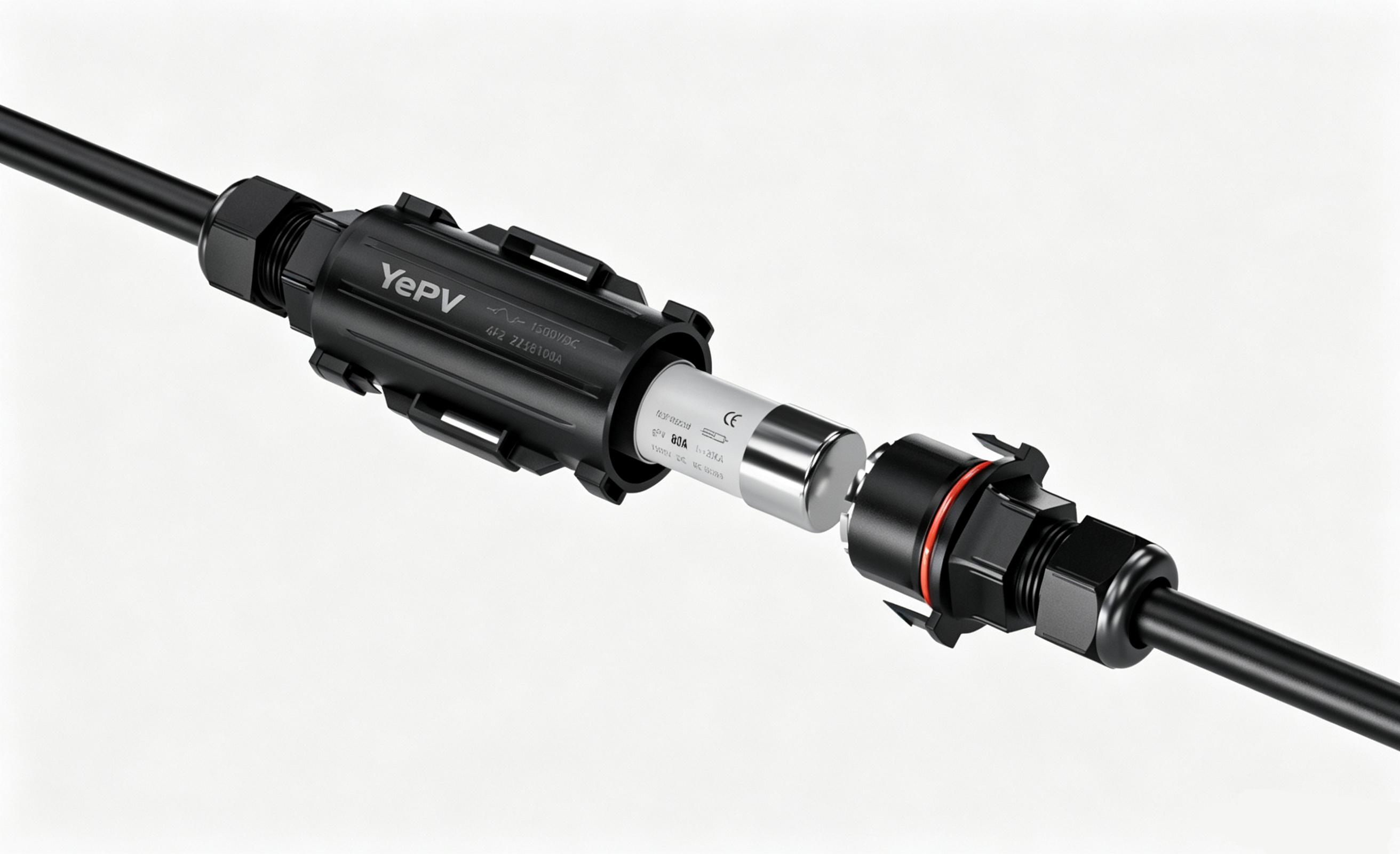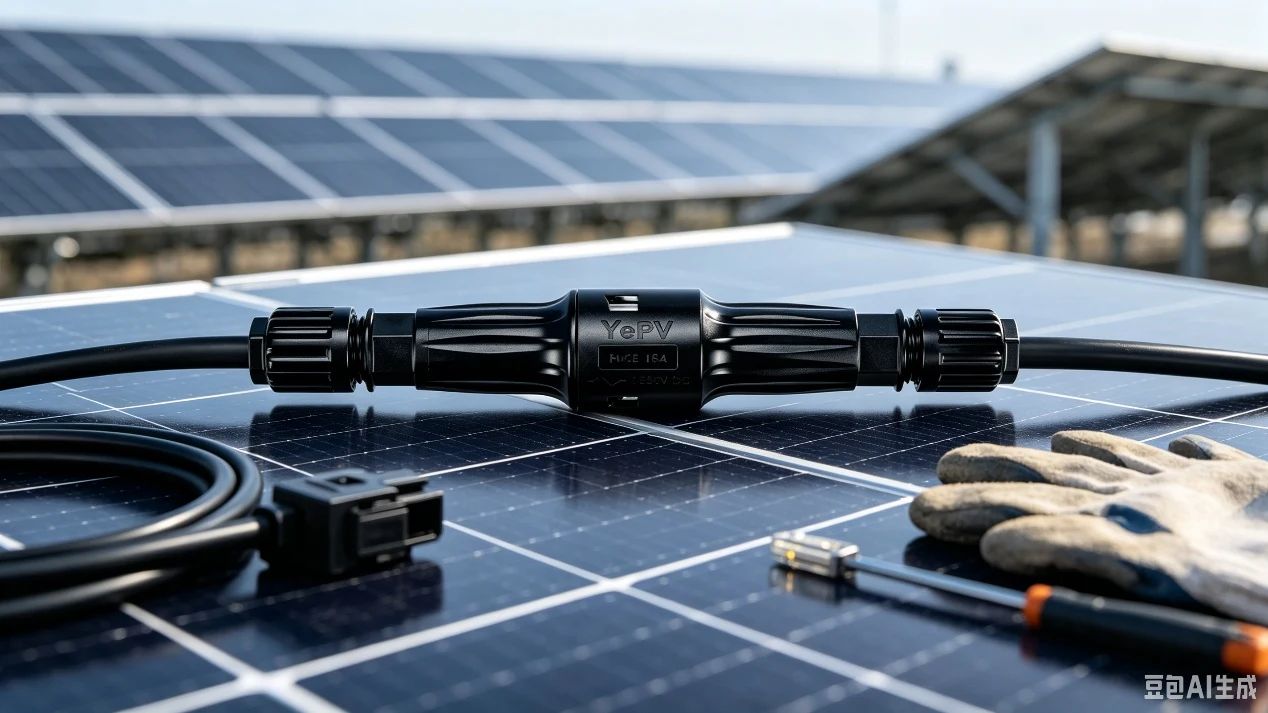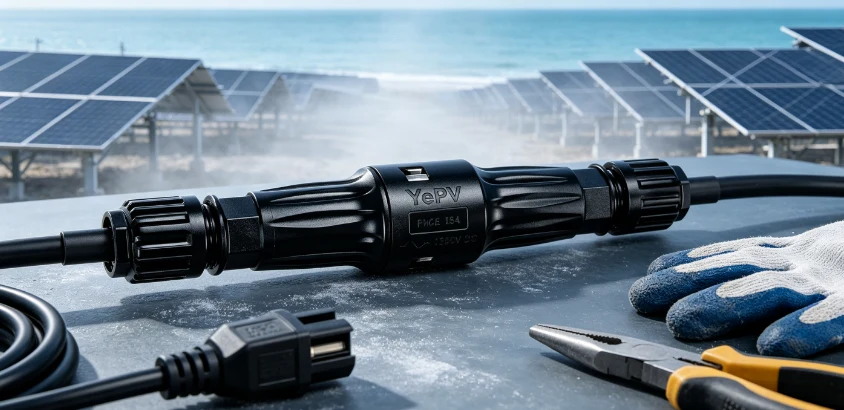
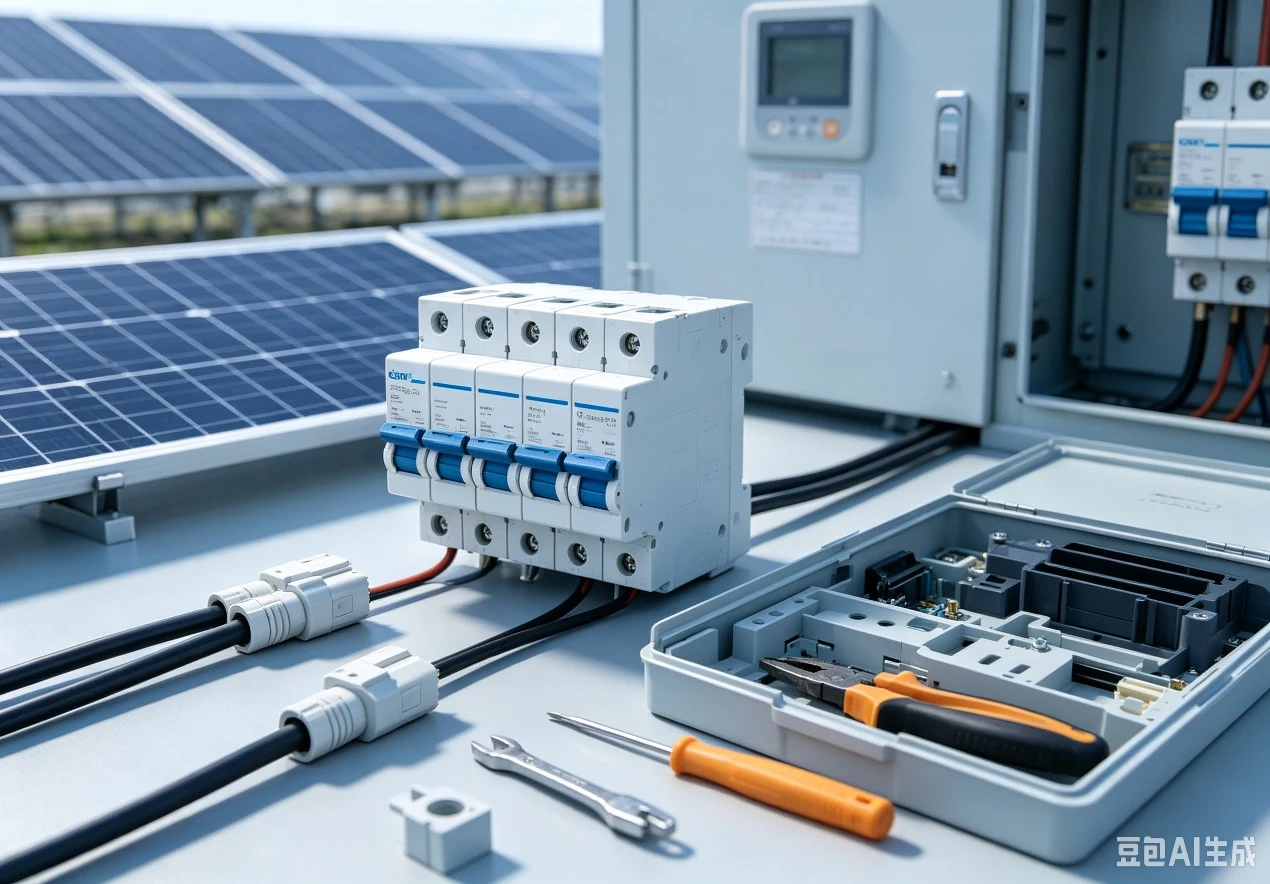
Breaking capacity — rated short-circuit breaking capacity — is the maximum fault current a protective device such as a fuse or breaker can safely interrupt at its rated voltage. In short: the limit at which the device can still open successfully without destroying itself or creating a hazard.
Why it matters
In a PV DC system with three or more parallel strings, a short in one string draws reverse current from every healthy string. That combined current can reach thousands or tens of thousands of amps. If the device's breaking capacity is below the available fault current, a fuse can rupture violently — body burst, arc and metal vapour ejected — and a breaker can weld its contacts shut or vent arc energy into surrounding material. The fault keeps burning and becomes a fire. With adequate breaking capacity the device clears the current cleanly, isolates the fault and lets the rest of the plant keep running.
What breaking capacity depends on
Typical levels in 1500V PV systems
How to choose
Calculate the maximum possible fault current, then select a device rated above it. For 1500V PV: string fuses >= 20kA (30kA or higher in practice), combiner main breakers >= 30kA and up to 50kA on large plants. Example: a 10MW plant with roughly 35kA available at the combiner DC busbar needs a main breaker rated at least 35kA — in practice a 50kA device.
Standards
Breaking capacity is the device's ultimate safe interruption limit. Above it the device may rupture instead of protecting the system — which makes it the final barrier against a DC fire.